
The Short Answer
Keep VideoGEO content accurate by connecting each important statement to its source, scope and owner, then reviewing affected material when those facts change. Treat a new formulation, specification, package or market restriction as a content event as well as a product event. Update the relevant destinations, preserve a record of what changed and check that older material is clearly distinguished from current information. AdCyte can support the evidence workflow; people remain responsible for approving the facts and the resulting content.
Three key takeaways
- Record which product, version, market and date a statement applies to before reusing it.
- Give product changes a clear route to content owners, including people responsible for external destinations.
- Correct the source and the affected content, then inspect what is actually visible. An edited draft is only the beginning.
Accuracy has a shelf life
A campaign can be perfectly accurate at launch and misleading six months later. The product gains a new battery. A standard accessory becomes optional. A diet cola gets a different pack size while last year's offer continues its surprisingly vigorous retirement on an old landing page.
The original team need not have done anything wrong. The problem is that the content has outlived the conditions that made it correct. VideoGEO extends the useful life of campaign information, which makes maintenance part of the job rather than an awkward afterthought.
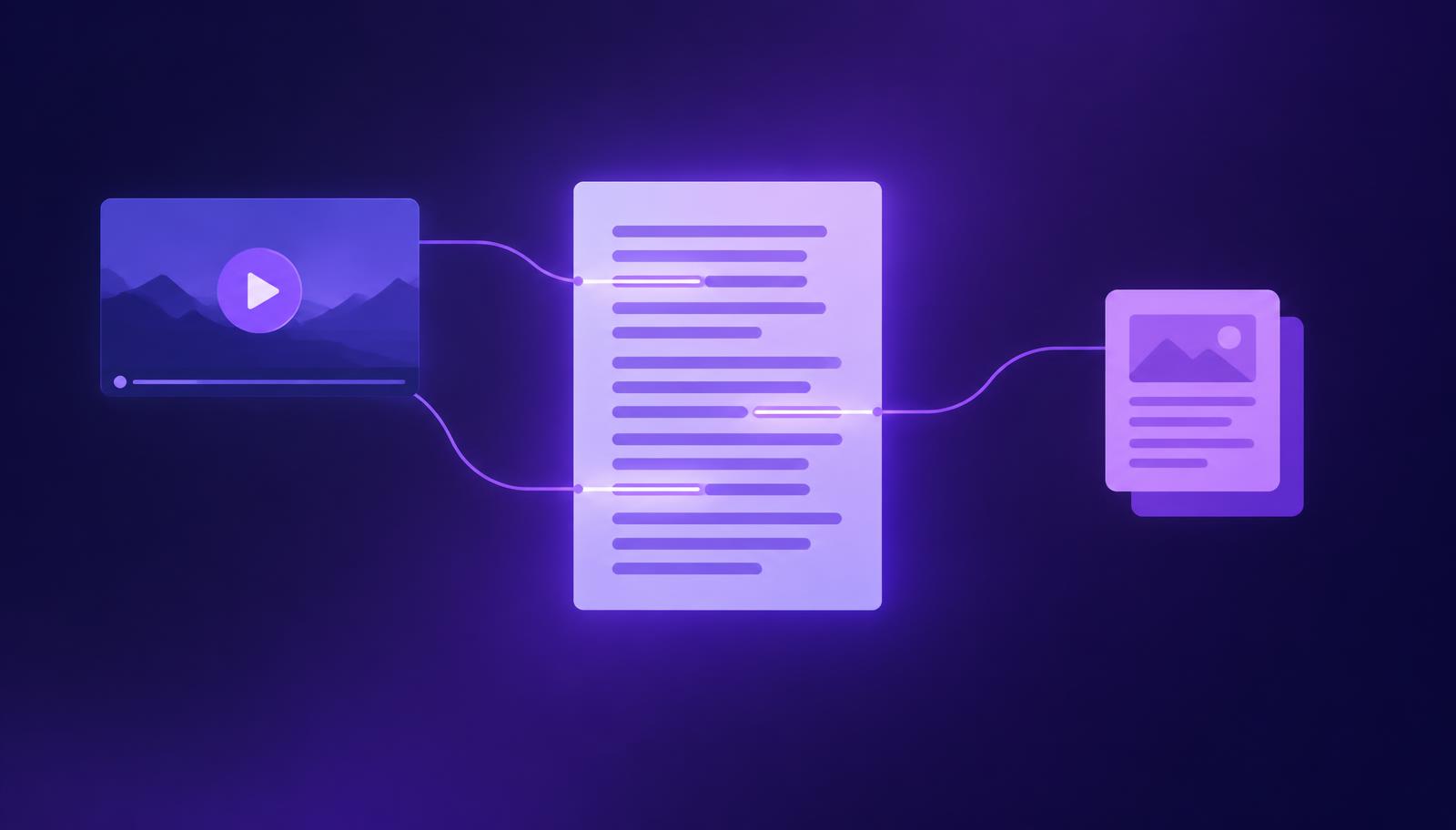
This is particularly important when one approved statement travels into several forms: a website answer, a YouTube description, a LinkedIn post and a campaign page. The initial review may have been excellent. If no one knows where the statement went, the next review becomes an archaeological expedition.
A claim is only reusable when its scope travels with it. The sentence alone rarely contains everything the next person needs.
Record enough context to prevent a confident mistake
For consequential product facts, keep the product or range identifier, the relevant version, the market and any conditions that limit the statement. Record the evidence and the person or team authorised to confirm it. Where dates matter, distinguish the date of approval from the period in which the fact applies.
These fields do not need to live in a new system. Use the approved product source, content register or existing workflow your organisation can maintain. A small, reliable record beats a beautifully ambitious database abandoned after the launch meeting.
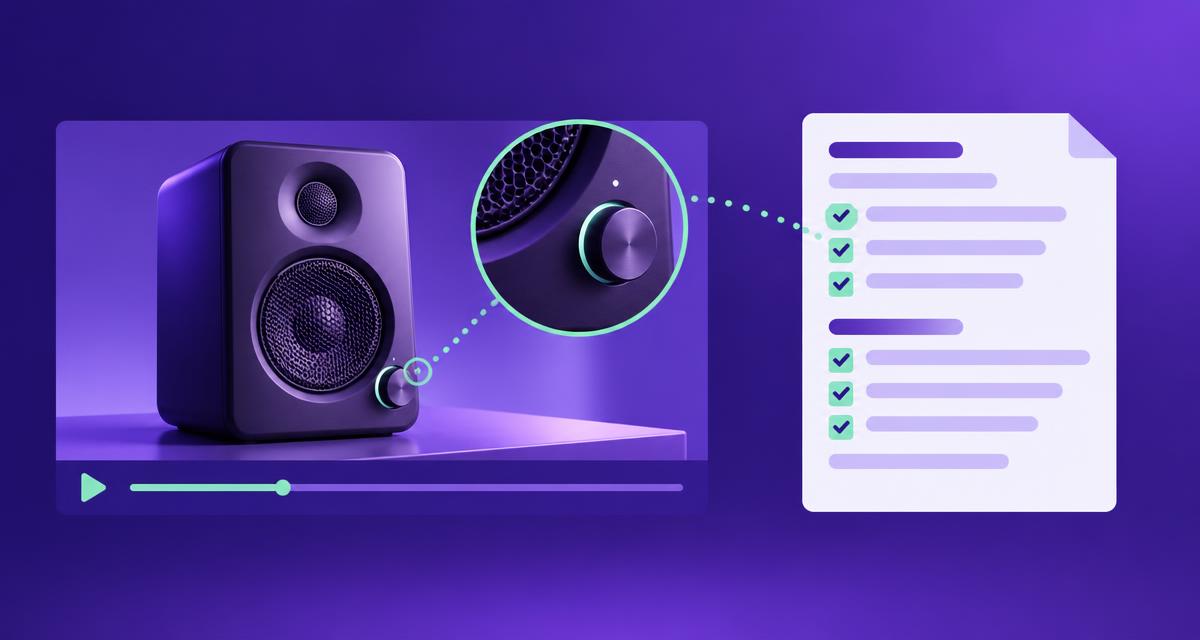
Video evidence adds a valuable layer: the actual moment that shows or states something. It does not automatically settle whether that statement applies to today's product. A close-up of a cable in an advert establishes that the cable was shown. The current package specification establishes whether customers receive it.
Keep the two connected and distinct. Reviewing findings against their source helps establish what the asset communicates; checking the approved fact determines what the new content may say now.
Decide which changes should trigger a review
Some changes deserve immediate attention because they alter a purchasing decision. Others need a scheduled refresh. Create a short trigger list with the teams who own the underlying facts, rather than asking editors to discover every change by intuition.
| Change | Content likely to need review | Useful owner to involve |
|---|---|---|
| Product specification or included item | Product answers, comparisons, descriptions | Product or category owner |
| Formulation or approved claim | Benefit statements, FAQs, campaign copy | Relevant claims and product reviewers |
| Market availability | Local pages, purchase guidance, destination links | Market or commercial team |
| Offer expiry or price change | Promotional pages and distribution copy | Campaign or ecommerce owner |
| New model replacing an old one | Recommendations, naming and version comparisons | Product and content owners |
Do not attach the same urgency to every comma. Prioritise material that could mislead a customer, make an unsupported promise or send them to the wrong product. Then handle lower-impact housekeeping through an ordinary review cycle.
Find the affected statements before rewriting everything
Start with the changed fact and identify the statements that depend on it. Search the known content destinations, related product names and common wording variants. Check the original video and its derived content, including work that has been approved but not yet published.
A useful impact record lists the statement, source, affected destinations, current status and responsible owner. If your current tools cannot trace every derivative automatically, maintain the record explicitly. Do not assume that an elegant-looking connection exists just because the workflow would benefit from one.
Different destinations may need different treatment. An evergreen buying guide should usually reflect the current offer. An archived launch announcement may remain historically accurate if its date and status are clear. A paid promotion that is still circulating may need operational attention beyond a content edit.
The purpose is to remove ambiguity for the next reader. Deleting every trace of the past is rarely a sensible maintenance policy; leaving the past dressed as the present is not much better.
Work through a change from beginning to end
Imagine a cordless vacuum previously sold with two attachments. A new UK standard package contains one, while a retailer bundle still contains both. Several campaign assets show the older package, and a website FAQ says that two attachments are included.
First, confirm the current package definitions with the product owner. Next, identify which website answers, campaign pages and distribution descriptions imply a universal two-attachment offer. Record the relevant video moments, but do not use them to overrule the newer package record.
Rewrite the answer so that it identifies the standard package and directs readers to the exact bundle details where appropriate. Review the product links too: a correct sentence beside the wrong purchase link still leaves the customer with a problem.
For an archived campaign page, add clear historical context if it remains useful. For an active product page, replace the outdated assertion. For an external destination, pass the approved correction to the owner who can edit it, then record whether the change was actually made.
Finally, inspect the public result. The preview may be correct while an older excerpt, cached card or duplicated description remains visible elsewhere. Maintenance is completed at the destination, not at the moment someone says “done” in a thread.
Give ownership a name
Separate the person who confirms the fact from the person who publishes the correction. In a small organisation they may be the same person. In a larger one, treating them as interchangeable creates delay and occasionally a very confident guess.
Agree who receives product-change notifications, who assesses the impact, who approves the revised wording and who closes the task after checking the destination. Include an escalation route when the fact is disputed or a high-impact page cannot be edited promptly.
A practical review record also notes unresolved items. If a distributor controls an external page, record the request and its status. Do not mark the whole change complete while one important destination continues to make the old promise.
This is a modest amount of administration in exchange for fewer avoidable surprises. The spreadsheet is permitted to be boring; the mistake it prevents usually is not.
Use monitoring to discover questions, not to certify truth
Sampled AI answers can reveal that an old specification is still appearing or that a new product is being confused with its predecessor. Preserve the answer and cited sources, then investigate the origin of the statement.
An incorrect answer does not prove that your website caused it. A corrected page does not guarantee that every provider will change its response. Use the observation to prioritise source improvements and repeat compatible checks where useful, while keeping those limits visible.
The same discipline applies when the answer happens to be right. A handful of accurate responses cannot certify the entire information environment. Your own approved facts and published destinations still need independent review.
For the investigation itself, follow the correction workflow. It separates what was observed from what your team can directly change.
Make maintenance part of publication
Before publishing a new answer, record its owner, source and likely change triggers. Decide whether it needs a review date or an event-driven check. A stable explanation of how a material works may need less frequent attention than an offer or compatibility list.
Build these responsibilities into campaign handover. The launch team can then leave behind something more useful than a folder called FINAL, whose contents contain several competing interpretations of finality.
Over time, the maintenance record becomes a source of editorial judgement. Repeated corrections can expose unclear product naming, weak approval language or a distribution process that strips away important conditions. Fixing that upstream problem reduces the number of downstream edits.
Put one live product through the workflow
Start with a product that has changed since its campaign launched. Use AdCyte to review the relevant advertising, connect the findings to current approved facts and identify the content that needs attention. For a larger campaign estate, book a demo around the ownership and review workflow.
FAQs
Does every product change require every article to be rewritten?
No. Review the statements that depend on the changed fact, then decide the appropriate treatment for each destination. Some pages need a direct correction, others need historical context, and some remain accurate. A clear record of source dependencies makes this assessment more precise and less wasteful.
Should we delete old campaign content?
Not automatically. Historical material can remain useful when its date, product version and limitations are clear. Remove or replace material when that is the appropriate editorial action, particularly if it misleads readers. Consider the purpose of the page and the information a visitor needs today.
Can a video prove that a product specification is still current?
A video can support what was shown or stated in that asset. It does not independently establish the current specification, availability or package contents. Confirm those details against the authorised product source, especially when the campaign predates a product change or covers a different market.
Who should approve a correction?
The team responsible for the underlying fact should confirm it, and the appropriate content owner should approve the resulting wording and publication. Existing organisational approval rules still apply. AdCyte can support analysis and content preparation, but it does not replace the authority of product, brand or specialist reviewers.
Will updating our website immediately change AI answers?
There is no such guarantee. Different systems may use different sources and update on different schedules, and some may continue to produce inaccurate answers. Correct the material you control, document external correction requests and use compatible sampled checks to observe what happens afterwards.
How often should we review VideoGEO content?
Use the volatility and consequence of the information to set the rhythm. Offers and compatibility details may need frequent checks, while stable explanations may need fewer. Combine scheduled reviews with event triggers, so a material product change does not wait politely for the next quarterly meeting.