
The Short Answer
Yes, some AI systems can analyse video, including its images, speech and on-screen text. VideoGEO matters because that capability does not ensure your campaign will be found, interpreted with the right product context, or used accurately in an answer. It gives brands a practical process for reviewing what their advertising contains, connecting it with approved information and publishing useful explanations. The value lies in making campaign knowledge dependable and available, then observing what happens when people ask relevant questions.
Three key takeaways
- A model's ability to understand a supplied video is different from a discovery service finding and using your campaign in a public answer.
- The video shows a particular creative execution. Current product facts, market scope and approved claims often need additional sources.
- VideoGEO should create useful, maintained information for customers. AI citations are observations to examine, rather than a promised reward for publishing.
What does it mean for AI to understand a video?
An AI system can identify objects, describe actions, process speech and answer questions about footage supplied to it. Google's Gemini video documentation, for example, describes analysis using both audio and visual information. So the claim that AI simply cannot see what is inside a video is a poor foundation for a serious marketing strategy.
Understanding is also task-dependent. Recognising a product on a table is one task. Explaining which version is available in the UK, which features are optional and whether an offer still applies is another. A film may contain enough information for the first answer and almost none for the second.
Consider a garden furniture advert. The camera shows a table being extended before friends arrive. An analysis may correctly describe the extension. The film does not necessarily establish its dimensions, material specification, assembly requirements or availability. An inviting lunch is still an inviting lunch, however enthusiastically the soundtrack tries to turn it into a technical document.
That boundary is where a useful VideoGEO process begins: identify what the campaign communicates, then establish what else the reader needs to know.
Why a private analysis does not establish public discovery
When you upload a video to an assistant, you have deliberately supplied the source and asked it to perform a task. A prospective customer asking a broad question has done neither. Their answer depends on the service, the sources available to it and the way that particular request is handled.
You therefore need to separate several questions that are often bundled together under “AI can understand our video”. Can the model process the file? Is a relevant public source accessible? Does the answer identify the right product? Does it retain the qualification? Does it provide a source someone can inspect?
| Question | What it establishes | What remains unresolved |
|---|---|---|
| Can a supplied video be analysed? | The system can perform a particular analysis task | Whether customers' answers will encounter that source |
| Can someone find the campaign online? | A public destination exists and can be located in that check | Whether a given AI service will select it |
| Does an answer describe the product correctly? | The sampled response contains a supported description | Whether the result is consistent across questions and services |
| Does the answer cite a page? | A source link appeared in that response | Whether anyone clicked, understood or acted on it |
These distinctions are practical. They stop a successful upload demonstration becoming a sweeping claim about market visibility. They also help you decide whether the next job is better source material, better publication or more careful observation.
What can the brand add that the film cannot?
The brand can supply current, accountable context. That includes product identity, variant names, market availability, approved descriptions and the boundaries of a claim. It can also explain the purpose of the creative: a demonstration, a launch announcement, an offer or an atmospheric brand film.
This matters because advertising is selective. A film may show a useful feature without dwelling on every condition. A campaign line may deliberately use metaphor. A six-second cutdown may omit detail that appears in the main film. Those are normal creative choices, but they affect what can safely become a standalone explanation.
Suppose a rechargeable lamp appears outdoors in a summer campaign. The footage supports a description of that scene. An approved specification might establish where the product can be used and any relevant conditions. The editor needs both sources before writing practical usage advice. A deck chair in the background is not a certification body.
Source context should become clearer as content travels. If the written answer loses the product version or the qualification attached to the original claim, the process has made the information less dependable, even if the prose is easier to read.
What useful VideoGEO work looks like
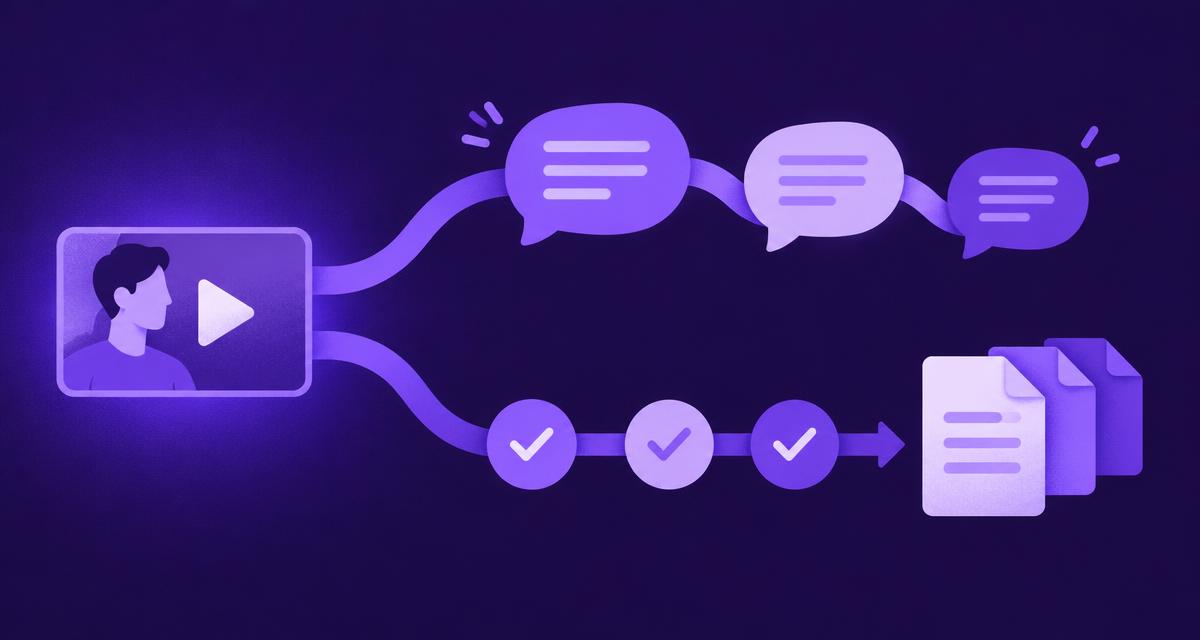
Start by running the advertising through AdCyte and reviewing the useful findings against their source moments. Include the main film and its relevant variations. A cutdown may introduce a different pack, message or offer; its shorter running time does not make it automatically redundant.
Then connect those findings with the approved information needed for a real customer question. “What does this table look like when extended?” and “Will it fit in my dining room?” require different answers. The first can draw heavily on the demonstration. The second needs verified dimensions and enough context to make them meaningful.
Choose an output that fits the evidence. That may be a product-page paragraph, an explanatory answer, a video description or a more substantial guide. A brand film with little factual detail can still support a thoughtful account of the campaign. It should not be asked to produce an encyclopaedia on the strength of three close-ups and a stirring voiceover.
Finally, review and publish the material through an appropriate destination. AdCyte provides a route from video findings to reviewed written outputs; the publishing route and any external handoff should match the capabilities available in the workspace. The first-video guide explains the starting workflow.
Does publishing text make the video irrelevant?
The written explanation and the video can serve different needs on the same page. Someone comparing dimensions may want an immediate answer. Someone trying to understand how the table opens may benefit from seeing the mechanism. A good page lets them do both without making either unnecessarily hard to find.
Written content also gives the brand a place to state scope explicitly. It can identify the depicted variant, link to the current specification and distinguish a campaign demonstration from general product guidance. Those details are useful to a customer whether they arrive through search, a sales email or an AI answer.
This is a stronger commercial reason to publish than the hope that a particular paragraph will be quoted. A citation may be valuable, but the page still needs to work when a human gets there. The explanation should answer the question, support the claim and offer a sensible next step.
Avoid creating a separate page for every small variation merely to increase the number of URLs. Analyse the ads, then decide which differences merit new public information and which belong in an existing destination.
How should you judge whether it is working?
First inspect the work you control. Can a reviewer trace a statement to the footage or approved reference? Does the public page explain the product accurately? Is there a named owner for changes? These are useful outcomes before any external answer changes.
Then examine discovery observations with their scope intact. Record the question, provider, date and actual answer. Distinguish a passing mention from a recommendation or a citation. If a service returns an inaccurate statement, investigate its apparent sources and your own published information before assuming the video was ignored.
Customer behaviour needs its own evidence. Referral visits, engagement and enquiries should be measured through the systems that actually record them. A citation count cannot stand in for those measures, and a rise after publication does not by itself prove that the publication caused it. Our guide to AI visibility signals explains those boundaries.
The useful question is whether the programme is building a more accurate, accessible body of information and helping the team make better decisions. If the only output is a larger folder of generated prose, there is room for a fairly brisk rethink.
What should a brand do first?
Choose one campaign with a recognisable product, current reference information and a few questions customers actually ask. Review every ad in that campaign, identify the strongest evidence and improve one or two public explanations. Keep a record of the effort, the decisions and any observations you make afterwards.
That small exercise will reveal more than an argument about whether AI can watch television. It tests whether your organisation can turn its creative investment into information people can use.
Explore AdCyte's VideoGEO content workflow, or follow the small-pilot guide to define a first campaign with a clear scope.
FAQs
Can AI analyse video without a transcript?
Some multimodal systems process visual and audio information directly, depending on their supported inputs and configuration. A transcript can still be useful, but it does not capture every visual detail. Check the capabilities of the system you are using rather than treating all AI products as equivalent.
If I upload an advert to an assistant, does that improve its public visibility?
An upload lets that particular workflow use the supplied file. It does not establish that the campaign will become a public source or appear in other people's answers. Public availability, publication choices and subsequent observations are separate matters.
Does VideoGEO require a new article for every ad?
Run every ad through AdCyte so relevant differences can be reviewed. Choose publication outputs according to the information and reader need. Several ads may support one maintained page, while a distinctive demonstration may justify a separate explanation or guide.
Can a campaign film support content without product specifications?
Yes, if the output stays within what the film and supplied context support. A campaign description can explain its setting, message and creative idea. Detailed product advice needs appropriate approved facts rather than imaginative completion.
Will VideoGEO guarantee citations in AI answers?
No. It can improve the quality and availability of your published information, but external services decide which sources they use. Observe actual answers and report their scope instead of promising a particular citation or ranking outcome.
Where should we start if our video library is large?
Start with a coherent campaign and a manageable set of customer questions. Use that pilot to establish evidence review, publication ownership and maintenance before extending the process across the library. Keep the wider analysis programme on the roadmap rather than making the entire archive a prerequisite.