
The Short Answer
Your video ads can keep contributing after paid distribution ends by becoming useful written content for your website, LinkedIn, YouTube, Reddit and other destinations. Analyse each ad, identify its products, messages and context, then combine those findings with approved brand information to create content suited to each audience. This gives every ad further opportunities to inform customers and be discovered through search and AI services. The creative has already done the hard work of getting the message into thirty seconds. There is more you can do with it.
Key takeaways
- Analyse every ad. Product demonstrations, brand films and short campaign cutdowns can all contribute useful information, context and creative detail.
- Give each destination a useful version. Turn those findings into website content, descriptions, posts and answers shaped around the reader and the channel.
- Keep the evidence connected. Preserve the source behind important statements, check product facts and measure how the resulting content is used and discovered.
What remains when the media spend stops?
A finished video ad contains decisions about the product, the audience and the message. Someone chose which use to demonstrate, which feature to show and which qualification needed to appear on screen. Those decisions can remain commercially useful long after the campaign’s final reporting meeting.
The finished file, however, may be stored with little more than a campaign name, a date and a description of the cut. That helps a colleague find the asset. It gives a content writer considerably less help with a question such as: “Which of our videos shows how this product fits into someone’s day?”
The organisation has already paid to develop and communicate the message. Making its useful information available for other purposes should be part of the campaign’s handover. A folder called “Final assets” is an optimistic place to end the thinking.
What can you learn from each ad?
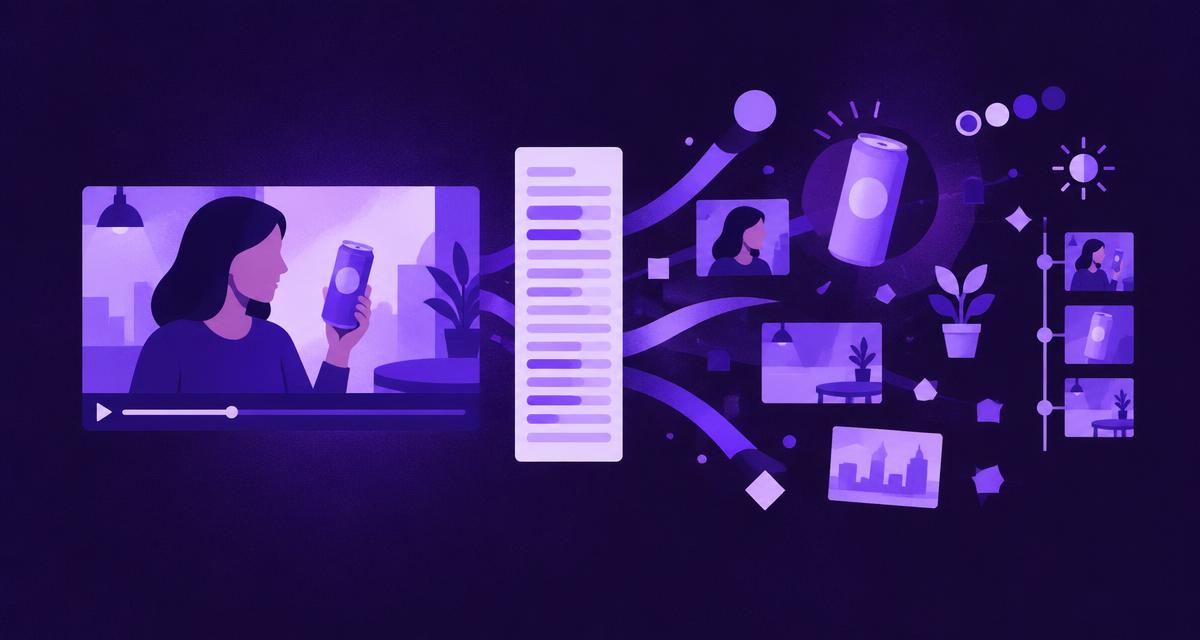
Start with what the ad contains: the product, the spoken message, the on-screen wording, the setting, the people and the actions. Then examine how those elements work together. A demonstration may explain a feature. A brand film may establish a use occasion, a creative theme or a particular way of presenting the product.
That gives even a short, largely visual ad something to contribute. A six-second cutdown might contain a specific pack, proposition or piece of wording that matters elsewhere in the campaign. Analysing it makes those details available for use alongside the rest of the collection.
Every ad should enter the process. The content you create from it should have a clear purpose. Some findings will support product answers; others will help describe the campaign, explain its message or produce writing consistent with its tone.
Customer questions provide a useful check on that purpose. Sales enquiries, support conversations and site searches can tell you what people actually want to know. Questions inferred from the creative can suggest further opportunities, provided you check whether the video and approved product information can support the answer.
How do you turn the findings into useful content?
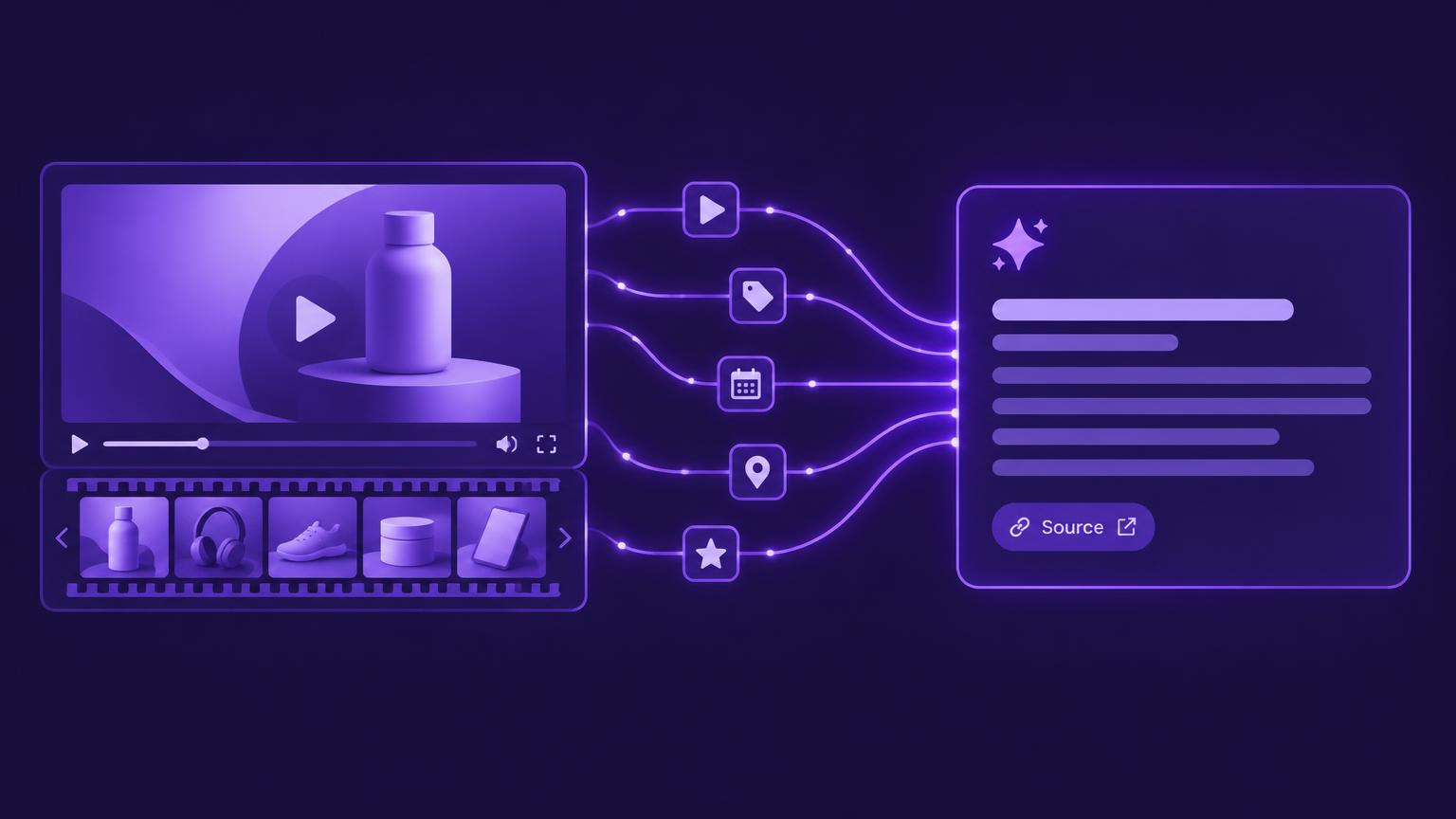
Run the ad through AdCyte, then review its analysis alongside the transcript, on-screen text and current product information. Keep the source moments connected to important statements so the writer and reviewer can check their basis without playing the whole video for the seventeenth time.
Separate what the footage shows from what the brand knows. A diet cola ad might show a can being enjoyed with lunch. Whether that drink contains caffeine, which pack sizes are available and where it is sold require product information. A beautifully lit packshot has its limits.
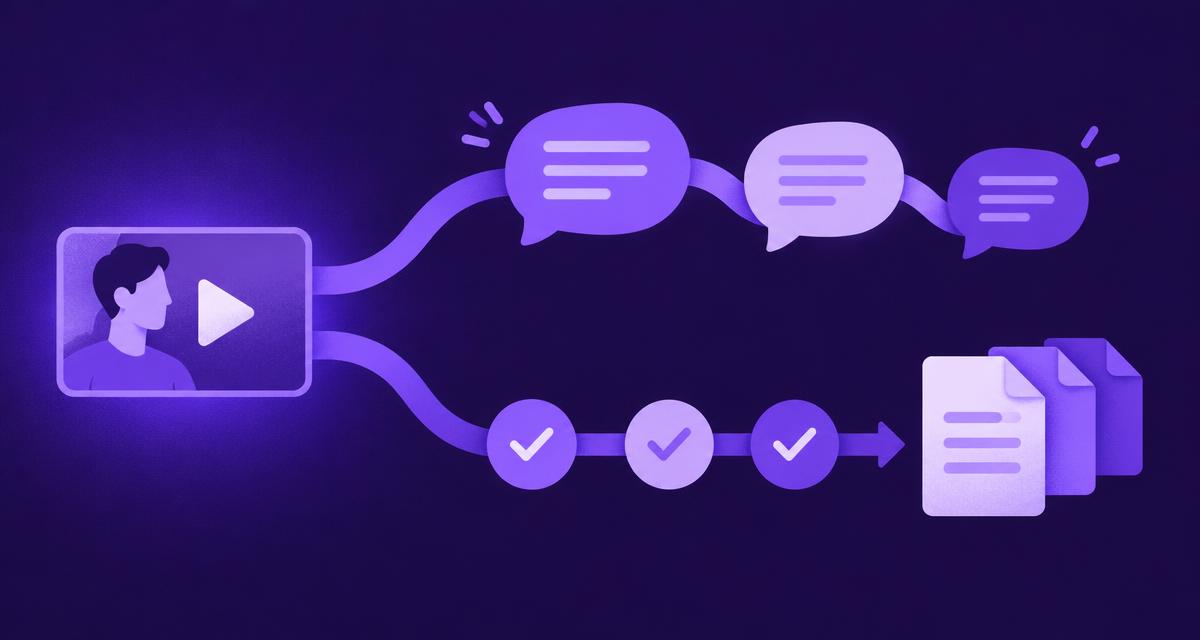
Next, develop the written material for the intended destination. A website may need a detailed explanation and FAQs. YouTube needs a description that makes the video’s subject and content clear. LinkedIn may call for a campaign story informed by the brief. A relevant Reddit discussion may benefit from a direct answer to a specific question.
AdCyte can help create these different versions from the same source material. Keep the important facts consistent while changing the emphasis, structure and level of detail for the audience.
Treat review and publication as part of the job. Record which output went where, who owns it and which product facts support it. That record becomes useful when the product, campaign or customer question changes.
What could you create from a diet cola campaign?
Imagine a 30-second diet cola ad. Friends meet for lunch, someone opens a chilled can, and the final shot shows the pack beside the campaign line. The can is clearly labelled 330 ml, and the on-screen message says “zero sugar”.
The analysis gives you several kinds of material: the product and variant, the pack size, the spoken and written message, the social setting and the sequence of the film. Check the factual details against the brand’s approved information, then decide how to use them.
| Destination | Useful content from the ad | What shapes the final version |
|---|---|---|
| Brand website | A detailed video description, product explanation and relevant FAQs | Approved product facts and questions customers need answered |
| YouTube | A clear description of the ad, featured product and campaign message | What actually appears in this particular video |
| A post introducing the campaign and explaining its creative idea | The video, campaign brief and intended professional audience | |
| A helpful answer to a relevant product or campaign question | The question, supporting facts and the community’s rules |
Each version has a different job. The website can explain the product in depth; the YouTube description helps someone understand the film; LinkedIn can explore the thinking behind it. On Reddit, usefulness and relevance need to lead. A press release wearing a Reddit username is still a press release.
The review also reveals questions that need more evidence. “Zero sugar” does not answer whether the drink contains caffeine. A group enjoying lunch does not establish a nutritional benefit. Those gaps tell the team which facts to supply before generating further answers.
The same ad can therefore support several useful conversations, with its source and message intact.
Where does VideoGEO fit?
VideoGEO applies this work to discovery through AI-generated answers. At AdCyte, we use the term for making useful information from video available as accurate, accessible content, then examining how that content appears in observed answers.
A video’s presence online does not tell you whether its useful details are explained clearly elsewhere. Written content can make the product, message and context explicit, while giving people a useful way to explore the subject without reconstructing it from the film.
Google’s guidance for AI Overviews and AI Mode says established SEO practices remain relevant. It recommends making important content available in text and discoverable through internal links, while making clear that eligibility does not guarantee inclusion. Read Google’s guidance.
For a brand, the practical opportunity is to give useful campaign information a clear public home and adapt it for relevant destinations. Each platform has its own audience and discovery mechanisms, so the same wording will not automatically serve them all equally well.
What should you measure?
Begin with the work completed: ads analysed, useful content created, factual issues resolved and material published across destinations. Then examine discovery and customer behaviour. Keeping those records separate helps you see where progress is happening and where further work is needed.
A cited page shows that a service referenced that source in an observed answer. A visit shows someone reached the destination. An enquiry or purchase records a further action. Understanding how the content contributed requires appropriate analytics and attribution.
Microsoft describes its Citation Share measure as observational and distinguishes it from traffic share. It also notes that citation patterns can change with models, competing content and wider changes across the web. Read Microsoft’s explanation.
Report what you changed, what you observed and what you can reasonably conclude. Keep the dates, questions and measurement method alongside any visibility result. That gives the team something useful to act on when the next report arrives.
How should you get started?
Take one campaign and run its ads through AdCyte. Reviewing the whole set gives you the different products, messages, scenes and variations to work with, including details that might disappear if you only examine the main film.
Choose your first destinations and the questions or stories each output should address. Review the generated writing against the source, add the necessary approved facts and publish through the appropriate route. Record the destination and give someone responsibility for keeping it current.
Make the same process part of future campaign handovers, alongside the finished video files. Over time, the collection becomes a source of usable campaign knowledge, with more of the production work contributing to what customers can find, read and understand.
Give your campaign a longer shelf life
Run your video ads through AdCyte and put their information to work across your website, LinkedIn, YouTube, Reddit and other relevant destinations. Create content that carries the campaign’s meaning forward, with the context and detail each audience needs. Explore AdCyte to get started.
Frequently asked questions
Should we run every video ad through AdCyte?
Yes. Our recommendation is to analyse every ad, including brand films, product demonstrations and shorter campaign versions. Each can contribute products, messages, context and creative details to your collection. AdCyte can then help turn those findings into useful content for your website, LinkedIn, YouTube, Reddit and other destinations, with the output shaped around its purpose.
What kinds of content can AdCyte create from an ad?
AdCyte can help create detailed descriptions, product explanations, answers, FAQs, campaign copy and platform-specific writing. A website article, YouTube description and LinkedIn post can draw on the same video while serving different readers. Content creation and publication are separate steps, so choose the appropriate publishing route for each destination.
Can this work with an ad that has very little dialogue?
Yes. Product appearances, packaging, on-screen text, settings and actions all contribute to the analysis. A largely visual ad can provide useful material for descriptions, campaign stories and audience-relevant content. Review interpretations against the footage and supply approved product facts wherever an answer needs information beyond what the video establishes.
What if the product has changed since the ad was made?
Analyse the ad, then review its information against the current product facts before creating or updating public content. Keep the original campaign context clear and correct any outdated statements. If the footage itself could confuse customers, consider how it should be presented and which written explanations need to accompany it.
How quickly should we expect results?
You can assess the usefulness and accuracy of the written outputs as soon as they are reviewed. Search visibility, AI citations and customer actions need separate measurement over time. Keep a baseline and compare equivalent observations, with the relevant platform and method recorded, so a single encouraging answer does not become an entire success story.
Does this increase the original campaign’s ROAS?
The additional content gives your video investment more opportunities to contribute to discovery and customer action. Any claim about return on ad spend still needs suitable attribution. Track the content produced, its observed visibility and the resulting customer activity, then report commercial impact where the evidence supports it.