
The Short Answer
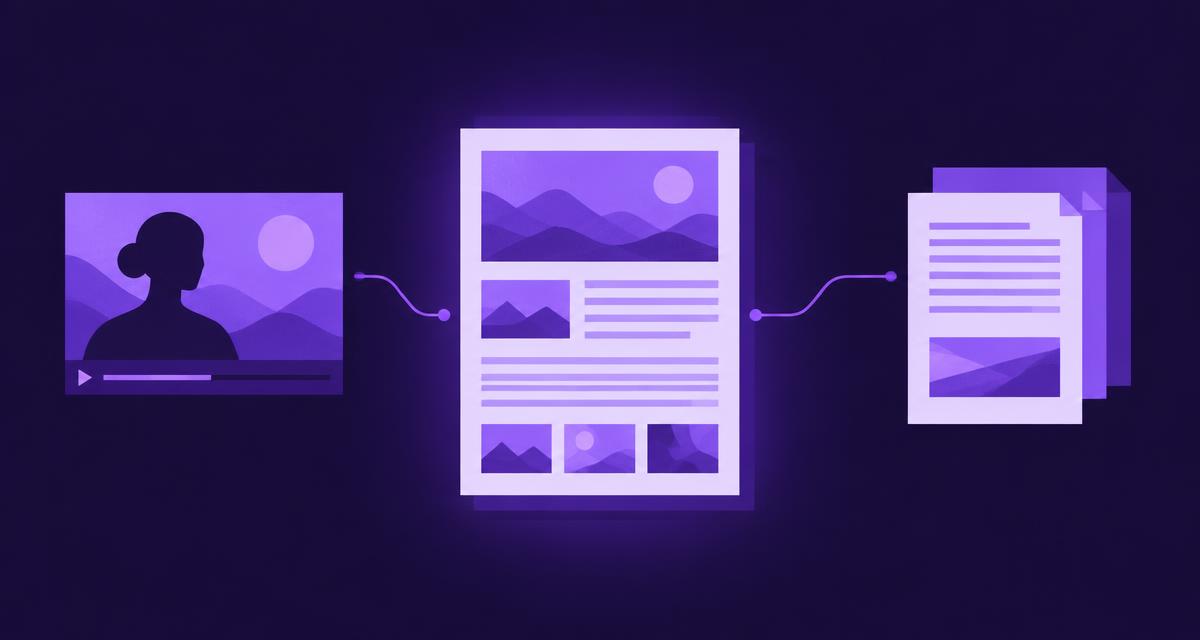
A standard video transcript captures speech and sometimes important sounds. It can leave out products, on-screen wording, demonstrations, settings and the relationship between what you hear and what you see. Those details often carry much of an ad's meaning. To turn a video ad into useful written content, examine the whole video, check the findings against the footage and add approved product information where needed. A transcript is a useful starting point. It has, however, attended the meeting with its eyes closed.
Key takeaways
- The picture carries information. Packaging, actions, text and scene changes can answer questions that the spoken script never addresses.
- Observation needs boundaries. Describe what the video establishes, and check interpretations or product claims against an appropriate source.
- Analyse every version. Brand films and short cutdowns can contribute different details, even when their transcripts are almost identical.
What does a transcript actually capture?
Transcription turns spoken language into written words. Depending on the approach, it may also identify speakers and describe significant sounds. That makes it useful for finding quotations, reviewing dialogue and understanding the spoken message without playing the soundtrack again.
The term needs a little care. A descriptive transcript can also include visual information. The W3C's guidance on visual description explains the importance of conveying visual details, including text displayed within a video. So the limitation belongs to an audio-only transcript, rather than to every document that happens to be called a transcript.
For a talking-head interview, the spoken words might carry most of the useful information. Advertising often distributes its message differently. The soundtrack creates a mood, the action demonstrates a use and the end frame identifies the product. Reading only the dialogue can leave you with a very accurate account of very little.
That matters when the next job is to create a product explanation, a campaign description or an answer to a customer question. You need the information that serves that job, wherever the creative team put it.
What can the picture tell you that the script cannot?
Imagine a diet cola ad built around friends arriving for a barbecue. Someone opens a fridge, takes out a can, pours it over ice and puts it beside a plate of food. The pack is visible, the final frame names the variant and a short line appears on screen. The voiceover says only, “Make an afternoon of it.”
A speech transcript gives you five words. The video gives you a product, a serving suggestion, a social occasion and the campaign's way of presenting them. The transcription has done its job perfectly. The content brief remains somewhat thirsty.
These layers support different kinds of writing. The serving sequence can inform a description of the creative. The product name can help connect the campaign to the right page. The occasion may suggest a useful editorial angle, provided the final piece has something worthwhile to say.
| Information in the ad | What it can contribute | What still needs checking |
|---|---|---|
| A visible pack and variant name | Correct product identification | Whether that pack and variant are current for the intended market |
| A drink poured over ice | A description of the serving sequence | Whether broader serving advice needs brand approval |
| Friends sharing a meal | The campaign's setting and occasion | Any claim about who actually buys the product |
| A line of on-screen text | The wording used in this version | Its full wording, qualifications and continued applicability |
| A visual product demonstration | An explanation of the action shown | Any performance claim that goes beyond the demonstration |
The useful habit is to ask what each detail supports. A scene can establish that an ad depicts a barbecue. It cannot establish that barbecues are the product's most popular occasion. That second statement needs a different source, however convincing the sausages look.
Why do sequence and context matter?
A video is a sequence of events, and the order can change the meaning. A person struggles with a task, uses a product and completes the task. A description that lists the person, product and location has recognised the ingredients while missing the recipe.
Consider an ad for a lightweight running shoe. Someone bends the sole across their hands before stepping onto a wet pavement. A transcript might contain a general line about everyday comfort. The action supplies a more specific explanation: the ad demonstrates the outsole being flexed on wet pavement.
That is useful material for a customer who wants to understand the configuration shown. It still does not establish the shoe's mileage, suitability for every surface or the performance of a different model. Those answers need approved specifications or other supporting information.
Context also prevents awkward descriptions. A worried expression before a demonstration and a relieved expression afterwards may be part of the story. Describing either frame in isolation could misrepresent the campaign. Review the surrounding sequence before assigning a meaning to a moment.
Where does useful interpretation become guesswork?
Analysis becomes less dependable when it quietly upgrades an observation into a conclusion. A person smiles after taking a sip; the draft says customers prefer the taste. A product appears outdoors; the draft says it is weatherproof. The footage has acquired several qualifications it never applied for.
Some interpretation is necessary. Describing a tone as playful, a scene as tense or an audience cue as youthful can help explain the creative. Treat those as interpretations and give the reader enough context to understand them. Avoid presenting them as research findings about real customers.
A visible event supports a description of that event. Broader claims need broader evidence. This principle is especially useful when a generated draft reads smoothly. Fluency makes a sentence easy to accept; it does not tell you where the sentence came from.
Keep a record of the relevant footage and separate it from additional brand information. Our article on turning video analysis into content you can trust explains how to manage those different sources without turning every paragraph into a footnote forest.
What should you capture beyond the spoken words?
Start with the product identity and the actions shown. Then examine on-screen text, pack details, spoken claims and any qualifications that affect their meaning. Capture the setting and creative treatment when they contribute to a useful explanation of the campaign. These details are part of giving the ad a useful life beyond its original campaign.
The aim is a usable account of the ad. An inventory of every chair, cloud and background plant will usually create more review work than insight. Detail earns its place when it helps identify the product, understand the message, answer a question or explain the creative.
Pay particular attention to the end frame and brief text overlays. A line visible for a short time can matter more to an accurate product description than a much longer scene. Check the original footage when text is small, partly obscured or difficult to read; an uncertain reading should stay uncertain until resolved.
Sound still belongs in this process. Spoken language, music and other audio can change how the visuals should be understood. Looking beyond transcription means considering the relationship between these elements, rather than discarding the transcript once something more fashionable arrives.
Why analyse every cutdown as well as the main film?
Campaign versions can differ in more than duration. A shorter edit may use another product shot, a different end card, a local offer or a revised line of text. Two versions with the same spoken script can therefore support different descriptions.
Running every ad through AdCyte gives the team an opportunity to capture those differences. Keep the identity of each version clear so that the detail from one market or edit does not wander into content about another. Campaign families are useful; mistaken identity is less so.
A largely atmospheric ad also deserves analysis. Its contribution may be the campaign story, setting, occasion or brand expression rather than a list of product specifications. Use that material for the writing it can support, and supply approved facts when the intended answer needs more detail.
How does this become useful content?
Choose the reader's question or the destination's purpose before writing. A website answer may need a direct explanation of the product demonstrated. A YouTube description may need to identify the campaign and summarise what happens. A LinkedIn post may discuss the creative choices and the thinking behind them.
The same analysis can inform all three, but each output needs its own editorial decisions. Copying a long scene description into every channel simply distributes the same reading problem more efficiently. A Reddit contribution, for example, should answer the discussion in front of it and respect the community's rules.
For VideoGEO, the opportunity is to make relevant information from video available in clear, useful content people can discover and understand. Google's guidance for its AI search features recommends making important content available in text. That supports a practical publishing choice; it does not guarantee that a particular page will be selected or cited.
Begin with one campaign, analyse every ad and review the material against a few real customer questions. You will see which answers the footage supports, which need brand facts and which should wait for better evidence. The first-video guide walks through that starting workflow.
Give the whole ad something to say
Run your video ads through AdCyte and use their spoken, visual and contextual information to create useful content across your website and other relevant destinations. Explore VideoGEO content generation to see how the campaign can contribute beyond its original placement.
Frequently asked questions
Is a video transcript the same as video analysis?
No. A standard audio transcript records spoken words and may include sounds or speaker labels. Video analysis can also examine visual information, actions, text and context. A descriptive transcript can include visual details, so check what a particular service actually produces rather than relying on its label alone.
Can an ad with no dialogue produce useful written content?
Yes. Products, pack details, actions, settings and on-screen wording can all contribute. A visual brand ad may support a campaign explanation or description of an occasion. More detailed product answers can combine those findings with approved brand information, while keeping clear which statements come from the footage.
Can I use on-screen text as an approved product fact?
Treat it first as evidence of what that version of the ad says. Check the complete wording, any qualifications, the product variant and whether it remains applicable. A historic offer or an old pack should not become a current product fact simply because the text was accurately extracted.
Should short cutdowns be analysed separately?
Yes. Our recommendation is to run every ad through AdCyte. Cutdowns can contain different packs, end frames, wording or market details, even when they share a soundtrack. Keep the versions identifiable so that content uses the details from the correct source and relevant campaign context.
Does this mean every ad needs a blog post?
Every ad should be analysed; the useful output will depend on its content and the audience's needs. Findings can support product-page copy, LinkedIn posts, YouTube descriptions, relevant Reddit answers and other writing. Several ads can contribute to one useful piece, and one ad can inform several different destinations.
Will writing about the visuals guarantee AI citations?
No. Clear written explanations can make information easier to use, but publication does not guarantee indexing, ranking or citation. Focus on accurate answers, relevant context, supporting sources and a technically accessible page. Measure what happens after publication without treating eligibility as a promised result.