The Short Answer
Yes, if the assistant and input method support video. It may help describe scenes, answer questions and draft useful copy. For a marketing team, the next question is how reliably you can repeat that work across ads, people and destinations. You need current brand facts, source checking, consistent briefs and a manageable review process. Compare the complete workflow, including the human effort it takes to maintain it. The first impressive answer is a beginning; it has not yet attended your approvals meeting.
Key takeaways
- Give general assistants a fair hearing. Video-capable models can do valuable analysis, and their abilities depend on the model, product and input route.
- Compare the whole job. Include preparation, source checking, brand context, revisions and the handover to publication.
- Test repeatability with your own ads. Judge supported answers and usable outputs, alongside the time your team spends getting them ready.
What can a general AI assistant do with video?
A capable assistant can be a useful place to explore a video, ask questions about its content and try different ways of describing it. For a small task with a knowledgeable reviewer, that may be all the tooling you need.
There is no sensible case for pretending these systems only read transcripts. Google's Gemini API documentation, for example, describes video understanding that includes descriptions, questions and answers, and references to timestamps. Those are documented API capabilities, rather than a promise about every consumer chat interface or subscription. Our explanation of what a video transcript leaves out covers why the input matters.
The distinction matters when choosing a tool. Check whether the actual product you are using accepts the video itself, a link, selected frames or only text. A successful answer about a transcript does not demonstrate that the system examined everything visible in the ad.
AdCyte's case should rest on helping teams organise and use video intelligence in their work. If a product comparison begins by pretending the alternatives are useless, it is probably going to be a long afternoon.
What happens after the first answer?
The first output is often produced under unusually helpful conditions. One person knows the campaign, supplies context and notices when a product name is wrong. They ask a follow-up question, add a missing fact and fix the result before sharing it.
That can work well. It also hides several parts of the process inside one person's judgement. Another colleague may use a different prompt, upload an older brief or miss the qualification at the end of the video. The outputs can then differ for reasons nobody has recorded.
For recurring work, make those decisions explicit. Define which information the system receives, how reviewers check important statements and where the resulting copy belongs. A clever prompt is useful, but it is a rather small filing cabinet for a whole marketing operation.
This is where a dedicated workflow deserves evaluation. The question is whether it reduces the effort required to produce work that is consistent, reviewable and useful to the next person. That benefit needs to show up in practice, rather than in a product comparison table with a suspicious number of ticks.
What should you compare in the two approaches?
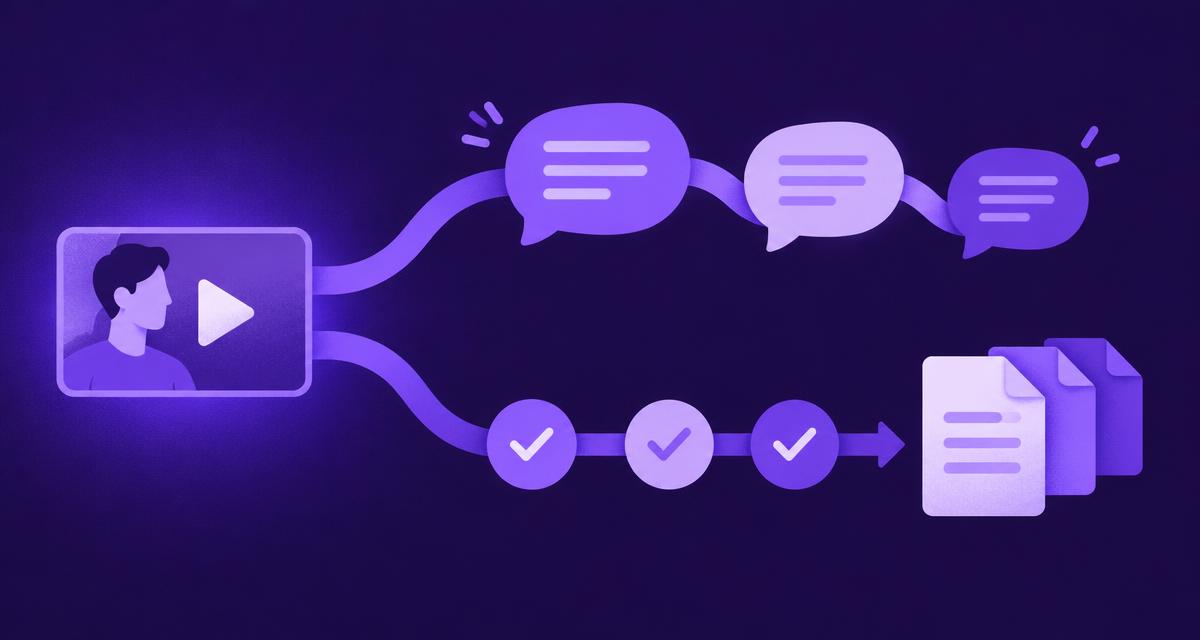
Start by describing the job you need done. For example: analyse every ad in a campaign, identify useful material, create website and social copy, review it against current brand facts and hand over the approved versions.
Then examine how each approach handles that job. A general assistant can form part of a well-designed system, including reusable instructions, documents and other tools. A dedicated platform also needs scrutiny. Buying software does not automatically confer editorial judgement.
| Part of the job | Question to ask of either approach |
|---|---|
| Receiving the source | What does it actually process, and can reviewers identify the exact video version? |
| Using brand context | How are current product facts and the right brief supplied? |
| Checking findings | Can a reviewer return to the relevant source and assess the wording? |
| Producing content | Can the team shape the output for a specific question and destination? |
| Revising the work | How are corrections retained and the intended final version identified? |
| Repeating the process | What preparation and supervision are needed for the next ad or colleague? |
| Handing off the output | Can someone find the right copy and understand what remains to be checked? |
Use the answers to compare actual working arrangements. Some organisations will already have much of this in place around a general assistant. Others will be reconstructing it from chat histories, spreadsheets and messages entitled “latest latest”. The latter deserves to appear in the cost calculation.
How do you test this without staging a beauty contest?
Choose a representative set of ads and use the same source material, brand information and output briefs for both approaches. Include dialogue, visual demonstrations, short cutdowns and an atmospheric brand film. A test built entirely around one easy talking-head video will tell you little about the rest of the collection.
Ask for outputs your team genuinely needs. That might be a product explanation, a campaign description and a short post for a specific audience. Avoid judging one approach on a polished article and the other on a rushed summary with no brief.
Define the review criteria before reading the outputs. Check product identification, important omissions, unsupported claims, qualifications, source references and suitability for the destination. Count the corrections needed and record the time spent preparing, checking and revising the work.
This is a proposed evaluation method, not a claim that AdCyte has won a benchmark. The useful result is work your team can verify and use. Attractive prose is part of that result, but it cannot compensate for a product claim that has wandered in without an invitation.
What might the test reveal on an ordinary campaign?
Take a diet cola campaign with a main film, two short edits and a market-specific end frame. Ask each approach to identify the variant shown, describe the creative and prepare content for a product page and a YouTube description.
The analysis may be broadly similar. The differences could appear during review: whether the team can locate a detail quickly, keep the end-frame wording attached to the correct edit, or reuse a corrected description without restarting the work.
Now introduce an approved fact that is absent from the video, such as the current pack sizes in that market. Check whether the resulting copy uses it accurately and keeps it separate from what the footage demonstrates. Then change the brief from product explanation to campaign commentary and see whether the output actually changes purpose.
Record where the human reviewer has to intervene. You are looking for both factual quality and operational friction. A tool that produces a strong first draft may still create considerable work if every subsequent revision requires somebody to reconstruct the context.
Does dedicated software remove the need for review?
No. Review belongs in either approach. A timestamp is useful only if the referenced moment supports the statement. A current brand document helps only if the right fact is applied to the right product and market.
The reviewer should distinguish direct observation from supplied facts and interpretation. “The ad shows a can being poured over ice” is a different kind of statement from “this variant is available in these pack sizes”. The two can sit in the same article, but they have different sources.
Our guide to checking findings against their source provides a practical process. The aim is to make checking easier and more consistent, including for colleagues who did not attend the campaign briefing and cannot identify every pack at twenty paces.
What does this mean for VideoGEO?
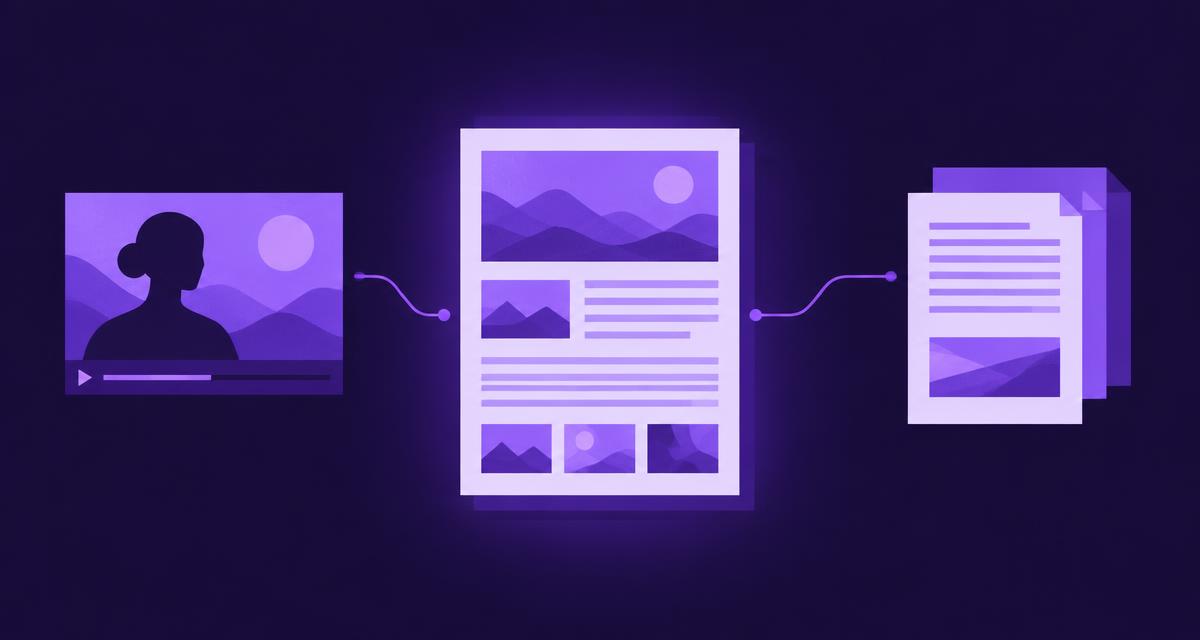
VideoGEO connects the information in video with useful content that can be discovered and understood across relevant destinations. Creating that content involves editorial choices: which question to answer, what the source supports and which additional facts the reader needs.
An assistant can help with drafting. A dedicated workflow can help organise the repeated journey from ad to reviewed output. Neither choice makes a page automatically visible in AI answers, and neither makes the same block of copy appropriate for every channel.
Evaluate website content, LinkedIn posts, YouTube descriptions and relevant community contributions against their own purpose. Then use the appropriate publication route for each. Content generation, distribution and measurement are connected jobs, with separate checks and responsibilities.
When does AdCyte make sense?
AdCyte is worth evaluating when video-derived content becomes a recurring part of the team's work. Run every ad through the process, including versions that contribute creative context rather than detailed specifications, and assess how the resulting material supports your publishing needs.
Start with a defined campaign and a small set of real output briefs. Compare the effort needed to reach a reviewed result, then repeat the exercise with another colleague. That second run is often revealing: the workflow should survive a change of operator.
If your existing approach performs well, the comparison will make its strengths clearer. If the team spends more time reconstructing context than using it, you have a concrete problem to solve. The first-video guide gives you a practical way to begin evaluating AdCyte.
Put the workflow to work
Bring a campaign, current brand information and a real content brief to AdCyte. Analyse the ads, review the findings and judge the resulting work against the questions above. Explore VideoGEO content generation and assess what it could contribute to your team's process.
Frequently asked questions
Can a general AI assistant analyse a video ad?
Yes, where the model, application and input method support video. Capabilities vary, so check what your chosen tool actually receives and processes. A video-capable system may describe scenes, answer questions and draft copy. A transcript-only workflow has different information available and should be assessed accordingly.
Is AdCyte claiming to have a uniquely capable underlying model?
The case made here is about the workflow around video analysis and content creation. Evaluate how AdCyte helps your team organise context, review findings and produce useful writing. This article does not claim a proprietary model advantage or present a completed head-to-head performance benchmark.
Could we build our own workflow around a general assistant?
Yes. Reusable instructions, approved documents and a defined review process can form a useful system. Include the work needed to maintain it, onboard colleagues and manage corrections when comparing options. A dedicated product should earn its place through practical benefits your team can observe.
What should we include in an evaluation?
Use representative ads, the same current brand information and equivalent output briefs. Review accuracy, missing details, unsupported claims, usefulness and the time needed for preparation and corrections. Include another colleague in a repeat run so the evaluation tests a shared process as well as one person's skill.
Do we still need to check generated content?
Yes. Review important statements against the footage or appropriate brand sources, preserve qualifications and confirm that the content fits its destination. A plausible sentence or a timestamp alone is insufficient. The relevant evidence must support the wording you plan to publish, whichever tool produced the first draft.
Should we only analyse the ads that need website articles?
No. We recommend analysing every ad through AdCyte. The findings can support many outputs, including descriptions, product answers, LinkedIn writing, YouTube copy and relevant community contributions. Choose the output according to the audience and purpose, then use the appropriate publishing route for that destination.