The Short Answer
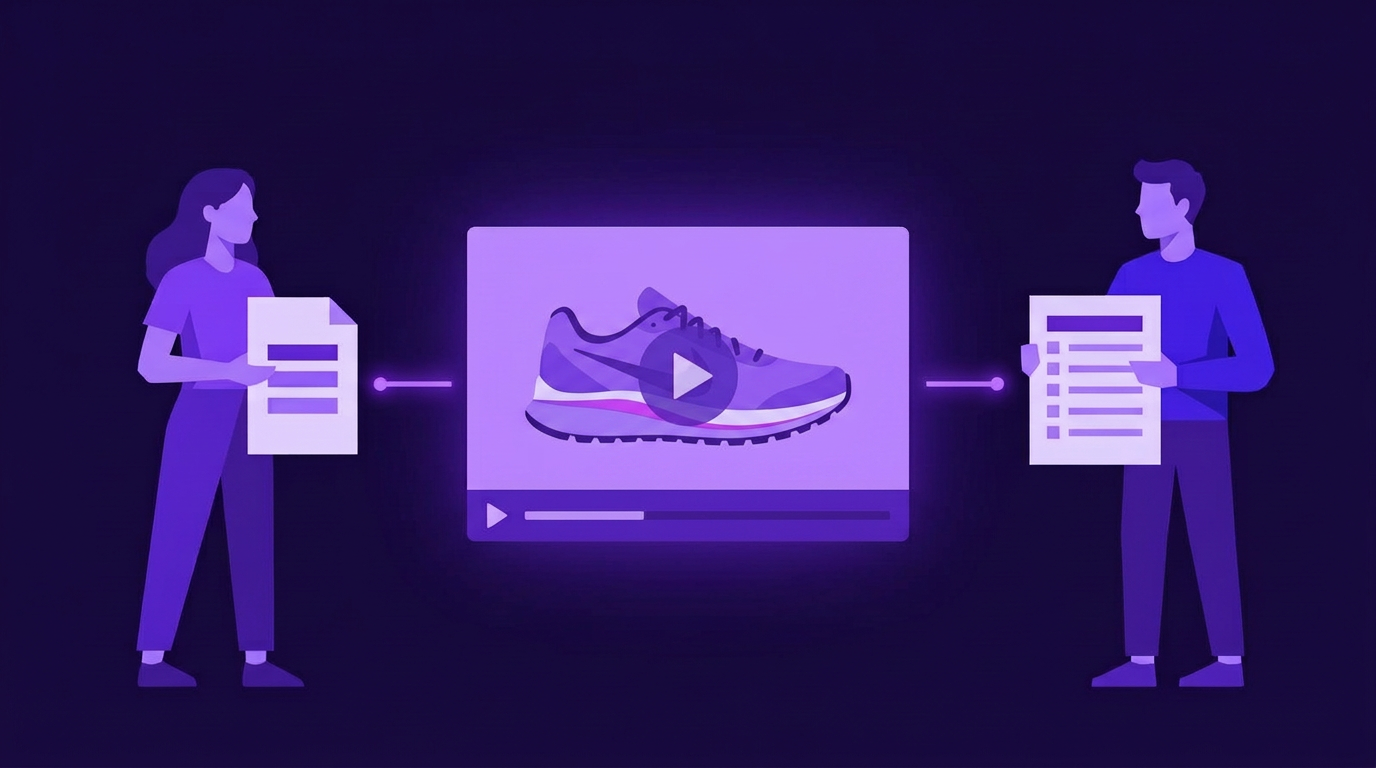
Enterprise teams can use VideoGEO to connect campaign evidence with approved information and accountable publishing workflows across a large video estate. The starting point should be a bounded group of brands or campaigns with clear source ownership, review responsibilities and destinations. AdCyte supports analysis and reviewed content creation, while existing asset, product and publishing systems retain their own roles. Scale should follow a repeatable process, with product capabilities and governance requirements verified against the intended deployment.
Three key takeaways
- A large archive becomes useful when its assets can be connected to current product identities, markets and responsible owners.
- Establish which system supplies each kind of information before designing integrations or generating content at scale.
- Prove the workflow with a contained portfolio, then expand according to source readiness, review capacity and verified product support.
Why does scale make campaign knowledge difficult to reuse?
A substantial video estate is rarely one tidy library. It may contain global campaigns, local adaptations, agency deliveries, product demonstrations and years of cutdowns. File names follow several conventions, including the enduring enterprise favourite: final, final-new and final-approved-really.
The information inside those assets can remain useful, but its context may be scattered. Which product version appears? Which market approved the claim? Who knows whether the reference is current? Where did the campaign description end up after launch?
These are knowledge and ownership questions before they are writing questions. Generating more descriptions without resolving them can multiply ambiguity. A polished paragraph does not make a source current or establish who may approve its publication.
VideoGEO offers a way to recover useful campaign information while preserving those boundaries. The enterprise task is to make that process repeatable across a portfolio without assuming every team, brand and market should work identically.
Define the role of each source system
Start by identifying where authoritative information lives. The asset library may hold the approved film. A product system may hold current specifications. Brand guidance may sit in another repository. The CMS controls the public page, while analytics and visibility tools record different kinds of observation.
AdCyte can analyse the video and support the preparation of reviewed written material. That does not establish that it replaces every source system or synchronises with them automatically. Design around verified capabilities and explicit handoffs.
| Information | Typical authority to identify | What the content workflow needs |
|---|---|---|
| Campaign asset and version | Asset or campaign owner | Correct file, context and permitted use |
| Product identity and facts | Product information owner | Current approved record and scope |
| Brand expression | Brand or editorial owner | Applicable guidance and examples |
| Published content | CMS or destination owner | Approved version, URL and update responsibility |
| AI answer observation | Defined monitoring method | Question, sample, provider and limitations |
The table describes responsibilities, not a required technology stack. A controlled manual handoff can be appropriate for a pilot. Automation becomes useful when the information and decisions being handed over are already clear.
Begin with a deliberately bounded portfolio
Choose a small group of related campaigns with accessible sources and available reviewers. One brand across two campaigns may be more instructive than ten brands selected solely to demonstrate scale. Alternatively, two contrasting brands can test whether guidance and ownership remain distinct, provided the deployment supports that separation.
State the questions the pilot will answer. Can the team identify current product information reliably? Can reviewers trace written statements to sources? Can useful outputs be published without repeated reconstruction of the brief? Can the organisation maintain the resulting pages?
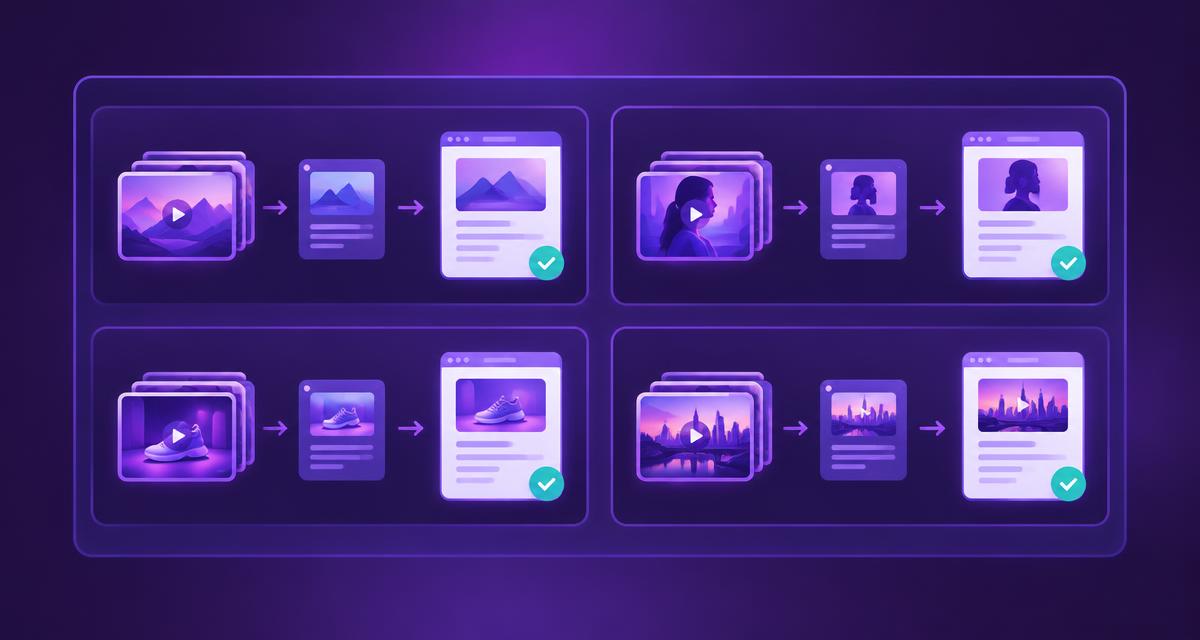
Run the selected campaign ads through AdCyte, including variations that may contain different information. Prioritise the most useful outputs without pretending the remainder of the estate has been covered. Record what the pilot deliberately excludes.
A bounded pilot gives procurement, product and editorial teams something concrete to assess. It also makes failure informative: a missing market reference can be resolved as a specific dependency rather than disappearing into an abstract discussion about enterprise readiness.
Keep brands and markets distinct
A portfolio may share systems while requiring different product facts, voices and review rules. Identify the scope of every brief: brand, campaign, product, market, language and destination where relevant. Use the controls available in the workspace and verify that they meet the intended separation requirements.
Do not infer a permissions model from the presence of a brand selector. A label in the interface and an enforced access boundary are different things. Enterprise buyers should inspect the actual account controls, data handling and deployment terms needed for their use case.
Editorial separation matters too. A successful paragraph for one brand should not become a source of product claims for another. Examples can guide style only within their authorised scope. Shared corporate guidance may coexist with local brand choices, but conflicts need an owner and an explicit resolution.
The brand-voice article explains how to make that guidance usable without relying on a generic list of tone adjectives.
Make review responsibilities visible
Assign responsibility to the type of decision. The campaign owner verifies the creative context. The product owner establishes current facts. The brand editor checks expression. The destination owner confirms the final public version. An overall workflow owner ensures unresolved questions reach the right person.
The record should show which version was reviewed and what remains open. Where the product provides appropriate revision or approval controls, use them. Where the pilot relies on external records, keep the handoff explicit rather than describing it as automated governance.
Enterprise scale requires traceable decisions, not merely more generated output. A reviewer should be able to explain why a claim appears, which source supports it and who owns its future correction.
Keep the process proportionate to the content. A short campaign description and a detailed technical explanation may require different review depth. The organisation should define that distinction according to the material and its existing policies.
Plan for source changes before expanding
Product facts, brand guidance and market context will change. The portfolio needs a way to identify affected content and decide what to do with it. Keep a record connecting sources, approved outputs and destinations, using current product capabilities and existing content operations.
A source-change notice, where available, can help direct attention. It does not establish that every external page has been updated or that historical content should be silently rewritten. The owner still needs to inspect the effect and verify the resulting publication.
Consider a product range that changes included accessories in one market. The enterprise review must identify the affected variants, current pages and supplied partner copy. Other brands and markets should not be altered merely because they share a template or a familiar phrase.
The content-change guide gives a practical process that works even when the distribution record spans several systems.
Decide which integration is worth building
Use the pilot to find repeated, well-defined handoffs. Perhaps reviewers repeatedly retrieve the same approved product record. Perhaps publication requires a consistent transfer to the CMS. Those are potential integration opportunities once the source identity, permissions and error handling are understood.
Ask what happens when the source is missing, outdated or contradictory. Ask who owns failures and how the public state is checked. An integration proposal should describe those cases as clearly as the successful path.
Avoid promising a connector, certification, retention arrangement or deployment model without checking the current product and commercial documentation. Enterprise requirements are specific; a general statement that the system is “built for enterprise” cannot settle them.
A useful integration reduces repeated work while preserving the right review boundary. It should not simply move uncertain information between systems at a more impressive speed.
What should justify the next stage?
Review the pilot's evidence quality, useful outputs, publication outcomes and actual effort. Identify repeated correction causes and unresolved dependencies. If AI visibility is included, retain the sampled answers and method separately from operational measures.
Expand where the workflow is repeatable and ownership is credible. That may mean another campaign within the same brand before adding a new market or business unit. Each additional dimension introduces questions the first pilot may not have tested.
The goal is a dependable way to reuse campaign knowledge across the organisation. A large archive can support that ambition, but volume is an input. The value appears when teams can use the information confidently and keep it accurate.
Explore AdCyte for enterprise organisations, or book a demo with a proposed pilot scope and the governance requirements your team needs to verify.
FAQs
Does AdCyte replace our digital asset management system?
Do not assume replacement. The workflow can use existing campaign assets while the asset system retains its own role and controls. Confirm how files, identifiers and any integrations will be handled in the intended deployment.
Can we use different guidance for different brands?
Define each brand's guidance and review scope separately, then verify the current workspace capabilities that support the intended workflow. Do not infer plan limits or access controls from a demonstration or development brief.
Should we analyse the whole video estate before publishing anything?
No. Begin with a bounded portfolio and its relevant ads, then establish a repeatable process. Broader analysis can follow a prioritised plan based on useful questions, source readiness and review capacity.
What governance checks belong in an enterprise evaluation?
Check the actual requirements for access, data handling, approvals, revision records, retention and integration behaviour against current product and commercial documentation. The necessary controls depend on your organisation and intended deployment.
Will an updated source automatically correct all outputs?
Verify the behaviour available in the product and each external destination. Keep an explicit review and publication process for affected material. A notification or updated reference does not by itself establish that every public version changed.
What should we bring to an enterprise demo?
Bring a small representative campaign set, current product references, brand guidance, intended destinations and the requirements that matter to your organisation. This supports a concrete discussion of the workflow, dependencies and deployment boundaries.
<!-- Public copy ends. -->