
The Short Answer
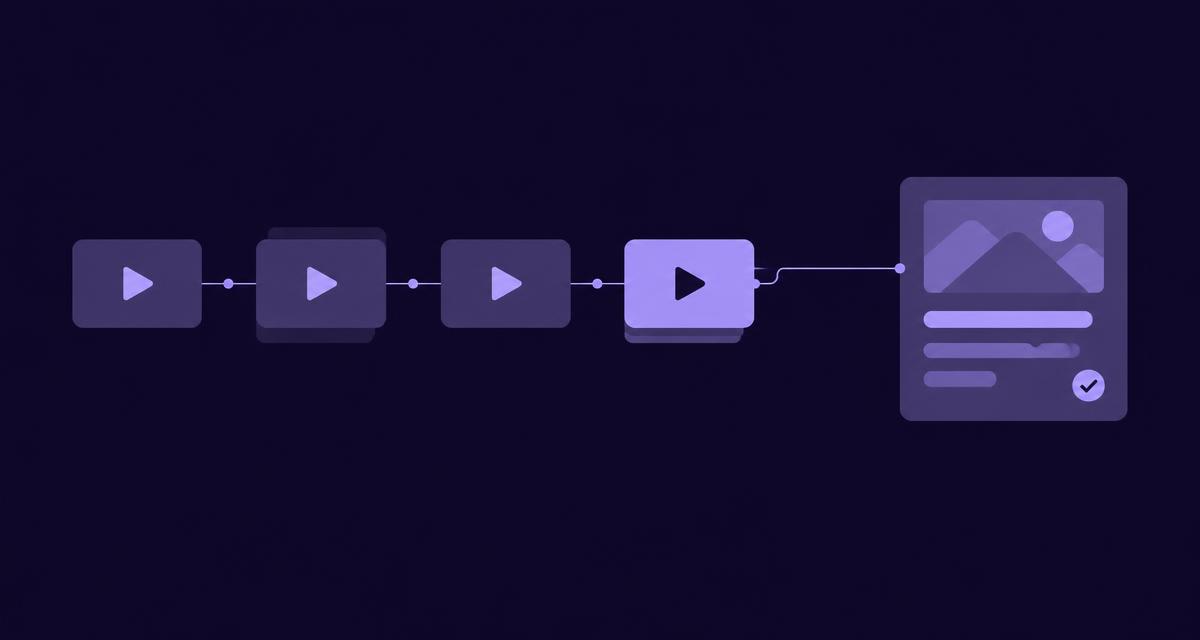
Content operations teams can make video knowledge reusable by recording what each asset communicates, connecting significant findings to the source and preserving the context needed for approval. AdCyte helps analyse advertising and prepare content from reviewed evidence. The surrounding workflow should identify product versions, markets, owners and approved facts so another team can use the findings confidently. Begin with a manageable campaign collection, then organise the material around useful questions and decisions rather than adding another folder full of unexplained files.
Three key takeaways
- Make the meaning inside the asset inspectable, alongside the metadata that helps people locate the file.
- Preserve version, market and approval context whenever findings are reused in new content.
- Measure whether people can answer real requests more reliably, and use those requests to improve the organisation of the collection.
Finding a file is the beginning of the task
A well-managed asset library can tell you where the approved video lives, which format it uses and who owns it. The next request is often harder: which advert demonstrates the attachment, what exactly does it claim, and can that wording be used for the current product?
Someone then watches several films, searches a transcript and asks the original team. The asset was discoverable; its knowledge still required a small expedition.
Content operations teams experience this gap repeatedly because they sit between production and reuse. They understand that a file, a finding and an approved fact are different things, even when a hurried request treats them as interchangeable.
Video analysis can make that distinction more useful. AdCyte identifies information contained in advertising and connects relevant findings to supporting moments. Operations teams can then organise the context that allows another person to review and use the material properly.
Decide what a reusable finding needs
A useful finding includes the observation, its source and enough scope to avoid a misleading interpretation. Record the asset and version, relevant time or scene, product identity and market where known. Link to the approved factual source when the finding will support a product statement.
Keep observation and approval separate. “The video shows a handset being used beside a pool” is an observation. A claim about water resistance requires the applicable approved specification and conditions. The pool has already contributed all the evidence it can reasonably provide.
Reuse should carry the source context forward. If the next writer sees only a shortened summary, important qualifications can disappear even though the original reviewer did careful work.
Use the existing systems that hold authoritative records. The operational task is to connect them clearly, whether through current product capabilities, consistent references or a maintained register. Do not assume every dependency is automatically tracked.
Organise around requests people actually make
Start with a small collection and examine recurring requests. People may ask for evidence about a feature, examples of a campaign message, current product variants or material suitable for a particular audience question.
Those requests suggest useful fields and groupings. Campaign, product, market, version and review status often matter. Add further detail only when it helps someone complete a real task. A taxonomy with forty rarely used fields can become an expensive tribute to a planning workshop.
Agree simple naming rules and a controlled set of tags where the existing workflow supports them. Document ambiguous cases: an asset may belong to a brand campaign while also showing a specific product. A clear primary relationship plus secondary context can be more useful than forcing an artificial choice.
The aim is to make the next relevant item easier to find and assess, while keeping the record practical enough for colleagues to maintain.
Distinguish the records that do different jobs
| Record | Useful question it answers | Typical responsibility |
|---|---|---|
| Asset record | Which file and version are we using? | Asset or production owner |
| Video finding | What does this asset show or say? | Analysis reviewer |
| Approved fact | What can we currently assert about the product? | Authorised product or claims owner |
| Content output | How are we explaining the information here? | Editor and approver |
| Publication record | Where is the approved material live? | Destination owner |
These records may sit in different systems. Keeping their roles clear prevents the asset library from being treated as a product database or a generated summary from becoming the sole authority for a claim.
It also clarifies change management. A new edit affects the asset and its findings. A changed specification can affect approved facts and published content even when the old video file remains untouched.
Build a collection that exposes useful differences
Consider a consumer electronics launch with a hero film, a feature demonstration, retail edits and local versions. Analyse every advert and review the significant findings. Then group the assets in a way that preserves their differences.
The hero film may establish positioning, the demonstration may show a particular interaction and the retail edit may introduce a package detail. A local version may use a different product name or availability statement.
Do not merge these observations into a universal description until the scope is checked. Instead, prepare a coverage record: which assets support which questions, where the supporting moment appears and what additional approved facts are required.
That record helps an editor choose the right evidence and helps operations spot gaps. Perhaps every asset communicates design, while none explains a practical compatibility question. The collection has now revealed something useful for both content planning and the next production brief.
See the campaign collection guide for a manageable way to build the record without assuming that every step requires a new system feature.
Make review status meaningful
A finding can be extracted without being reviewed. A reviewed observation can still require a factual check before it becomes a publishable statement. An approved draft can remain unpublished. Keep these stages legible.
Use status labels that correspond to actual decisions and owners. Record why an item is blocked: unclear product identity, missing source, disputed wording or an unavailable approver. “In progress” is occasionally accurate and frequently a place where information goes to avoid further questions.
When a review changes a finding, preserve enough explanation for the next user to understand the correction. A rejected interpretation can be valuable context if it prevents the same mistake from being rediscovered by each new writer.
The operational benefit comes from trust in the status. If “approved” sometimes means “someone probably looked at it”, the workflow will compensate with repeated checking and increasingly elaborate email subject lines.
Design a handover that survives the receiving team
Give the next team the relevant question, reviewed evidence, approved wording or facts, scope and remaining decisions. Link to the source rather than relying on a detached excerpt. Name the person who can resolve uncertainty.
For publication, include the intended destination and the owner who can make it live. Confirm the current AdCyte publication capabilities; use the existing channel workflow where a manual handover is needed.
For future reuse, preserve a reference to the approved source and any change triggers. A statement about an included accessory needs attention when the package changes. A campaign description may remain useful as a dated historical record.
This handover should be concise enough to use. Operations quality is measured by whether the next person can act correctly, not by the page count of the accompanying instructions.
Test the system with an ordinary request
Choose a request the team has handled before: find evidence for a feature, prepare a product answer or identify the correct market version. Ask someone outside the original project to complete it using the new record.
Observe where they hesitate. Can they find the asset, inspect the supporting moment, identify the current fact and understand the approval status? Record the time and the unresolved questions if those measures help assess the workflow.
Use the result to improve the collection. Missing fields, unclear tags and ambiguous ownership are easier to fix when attached to a concrete task. Avoid adding complexity simply because a new field is available.
Over time, the team can assess whether requests require less reconstruction and whether fewer drafts fail for preventable factual reasons. Those are meaningful operational outcomes, even when they do not fit neatly into a headline about AI.
Give one campaign a more useful record
Explore AdCyte for creative and content operations, then use the collection guide with a manageable asset set. For a larger video estate, book a demo around one recurring retrieval or handover problem.
FAQs
Does AdCyte replace our digital asset management system?
The workflow here complements the systems that manage files, versions and rights by making information inside advertising easier to inspect and use. Keep authoritative records and existing responsibilities clear. Confirm any integration or transfer process in your current setup rather than assuming an automatic connection between systems.
Should we analyse every advert in a collection?
Yes. Different edits can retain or remove important context, show different products or communicate different claims. Analyse the full set, then organise overlapping findings without losing their source relationships. This does not mean every asset needs a separate page or other standalone published output.
What metadata should we start with?
Begin with the fields needed for real requests: campaign, product, asset version, market, source reference, owner and review status. Add further detail when it helps someone find or assess relevant evidence. A smaller set maintained consistently is more useful than a comprehensive taxonomy that nobody completes.
Is a reviewed video finding an approved product fact?
Not automatically. Reviewing a finding establishes whether it accurately reflects the asset. A product statement may also need confirmation against an authorised source and the relevant market or version. Keep those decisions separate so an observation cannot silently become a broader claim.
What if our tools cannot track every content dependency automatically?
Maintain a practical reference record for consequential statements and their destinations. Include the source, owner, scope and change triggers. Use available product features where they help, but do not describe a dependency as tracked until the team can actually follow it and act on a change.
How do we know whether the organisation is useful?
Test it with real retrieval and reuse tasks. Check whether someone can find the correct asset, inspect evidence, identify current facts and understand the next approval step. Measure time or rework where useful, and improve the record based on observed friction rather than theoretical completeness.
<!-- Public copy ends. -->