
The Short Answer
Fashion and luxury brands can use VideoGEO to explain the information and creative meaning in campaign films while preserving the distinction between storytelling and product facts. AdCyte helps teams review what the footage contains and prepare useful written material for campaign, collection and product destinations. The strongest approach gives each output a clear purpose: interpret the campaign with approved context, identify the relevant items accurately and use authorised references for materials, craftsmanship and provenance. Clarity can support the creative rather than dilute it.
Three key takeaways
- Campaign interpretation and product explanation serve different reader needs, even when they draw on the same film.
- Materials, construction and provenance require appropriate references; cinematic cues are not sufficient evidence.
- Preserve the brand's character through editorial choices while making product identity and useful next steps clear.
Why does discoverability feel awkward for a highly creative brand?
Fashion and luxury campaigns often depend on suggestion. The setting, movement, styling and rhythm create associations that a product list could never reproduce. Asking the content team to turn that work into searchable information can sound like a request to remove everything that made it interesting.
The tension becomes sharper when the brief arrives as a list of keywords. The campaign's distinctive idea disappears beneath generic language about timeless elegance, exceptional quality and the modern individual. Several competitors could publish the paragraph unchanged, which rather defeats the point of having commissioned the film.
A better brief begins with the reader. Someone may want to understand the collection, identify the coat they saw or learn whether a depicted detail belongs to the item they are considering. Clear answers can help with those tasks while leaving the campaign's visual expression intact.
VideoGEO is useful when it connects that creative investment with accurate, well-judged explanations. It should give the work a more intelligible public presence without turning every scene into a sales bullet.
Give the campaign and the product different editorial jobs
A campaign page can explain the creative idea, setting and relationship to the collection. A product page can identify the item and provide current materials, construction, care and availability information. A collection introduction can connect the two at the appropriate level of detail.
Those jobs overlap, but they should not be collapsed into one universal paragraph. A campaign story may allow interpretation and atmosphere. A product answer needs precision where the customer is making a choice.
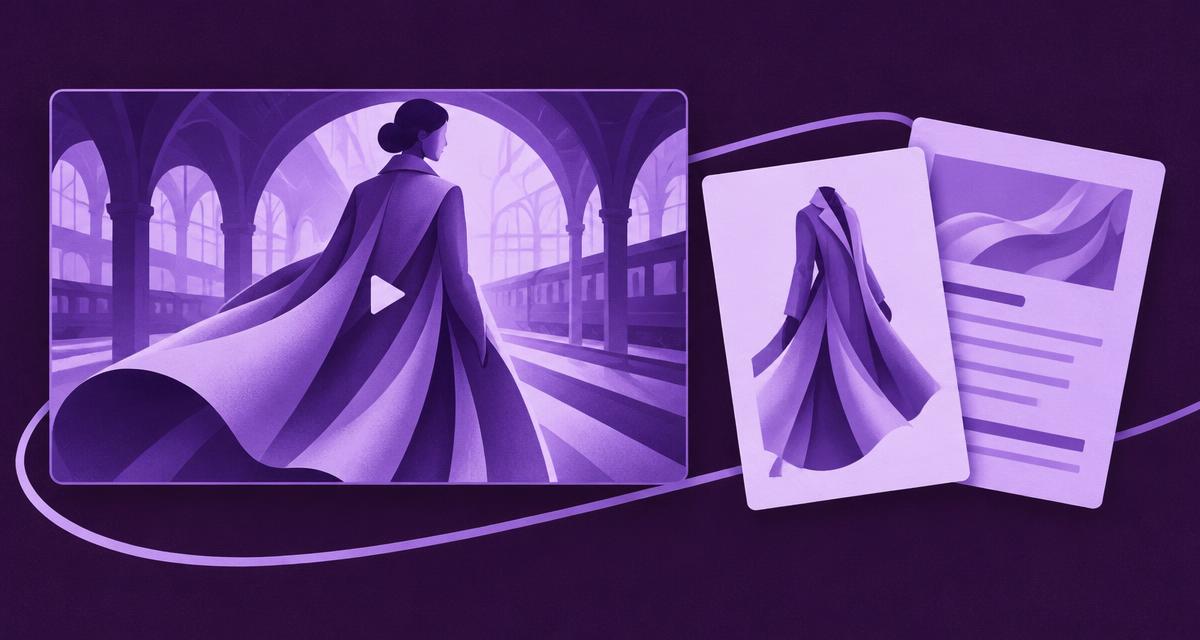
Imagine a film following a traveller through a railway station in a long wool coat. The campaign account can discuss movement and departure if that reading fits the approved context. The product page should use the current composition record rather than infer materials from the way the fabric moves.
This division also helps review. The creative owner can judge whether the account respects the idea, while the product specialist checks what is being said about the garment. Each brings expertise that the other should not have to improvise.
Identify the item before describing its qualities
Campaign styling can make product identity surprisingly difficult. A coat may appear in several colours, a bag may be shown with a separate strap or a runway sample may differ from the item sold in a particular market. Review the relevant footage and match it to the authorised product record.
Record collection, season, item name, variant and market where those distinctions matter. Keep the working identity precise even when the public copy uses a more natural presentation. If the film features several pieces, avoid assigning every visible detail to the main advertised item.
| Reader question | Useful campaign evidence | Reference needed |
|---|---|---|
| Which coat appears in the film? | Clear frames and campaign context | Approved item and variant mapping |
| How does the garment move? | The visible sequence | Careful description without inferred performance |
| What is it made from? | Product identification, if clear | Current authorised composition information |
| Where or how was it made? | Relevant depicted activity, if any | Approved provenance or construction record |
The film helps the team find and explain details. It does not make every surrounding assumption true.
Treat craftsmanship claims with precision
A close-up of hands, a workshop or a stitched seam can communicate care and attention. It does not necessarily establish the production method for every item in the collection. The written claim needs to match what the brand can support for the relevant product.
Use approved wording for materials, construction and origin. Retain its scope. If a particular component is finished by hand, do not expand that into a claim that the entire product is handmade. If a film depicts a specialist process, explain which part of the product it concerns.
The more valuable a provenance claim is to the brand, the more carefully its scope should travel with it. A precise explanation can be compelling because it gives the reader something concrete to understand.
Avoid filling a sparse source record with ceremonial adjectives. “Exceptional craftsmanship” may sound comfortable in the paragraph, but a clear, supported account of the actual work is more useful. The writing should have something to show for its confidence.
Preserve the film's character in the prose
Use the campaign's approved context to guide interpretation, then choose details that help the reader see the idea. The description can reflect the film's pace and mood without copying its voiceover or narrating every shot.
Brand guidance should explain the writing choices that matter. Is the tone spare or expansive? Does it use cultural references, direct observation or a more reflective perspective? Which phrases have become too generic to serve the brand?
Give the writer approved examples with reasons. Keep them separate from product facts so an old campaign's memorable line does not import an outdated promise. Review the result for recognisable character and factual accuracy in separate passes.
The brand-voice calibration guide provides a practical method. A little restraint is useful here: if every sentence arrives wearing evening dress, the reader may struggle to find the product information.
Build a small set of connected outputs
Run every ad in the campaign through AdCyte, including relevant cutdowns. Review the findings, establish product identities and decide which source moments support each output. The hero film and a detail-focused cutdown may contribute different information to one collection story.
A useful first set could contain a campaign description, a collection introduction and one product-detail answer. Each should have a distinct job and a suitable destination. Do not require a separate article for every edit or publish several near-identical versions of the same account.
The campaign page can link to the relevant items. The product page can link back to the film where it adds useful context. Video descriptions can identify the collection and provide an appropriate route to current information.
Use the campaign content-plan guide to connect sources, audiences and destinations before generating a large volume of copy. A coordinated plan makes the differences between outputs deliberate.
Keep seasonal context visible after launch
Campaigns can remain culturally or editorially useful after a collection changes. The surrounding content should make its period and purpose clear. A campaign archive can preserve the story while current product destinations handle present availability.
Review links and calls to action when items sell out, change or leave the range. Avoid presenting an old campaign page as a current collection simply because the imagery still looks excellent. Equally, do not assume all historical material should disappear when the commercial season ends.
Assign an owner to the public destinations and retain the source record. When a product fact changes, inspect affected explanations rather than silently rewriting the historical account of the campaign.
The article on when to keep, update or retire a campaign page explains how to make that decision according to the reader's continuing need.
What would a useful first project establish?
Choose one campaign with accessible films, approved creative context and a reliable product mapping. Select a few questions that connect the creative to something a customer genuinely wants to understand. Keep the outputs small enough for both creative and product owners to review properly.
Assess whether the resulting content preserves the campaign's character, identifies the products accurately and gives readers a useful next step. Record review effort and repeated correction causes so the process can improve before it expands across the archive.
If you observe AI answers, inspect whether they identify the correct collection and retain the meaning and scope of the published information. Keep sampled mentions and citations distinct from customer engagement or sales outcomes.
The opportunity is a richer, more dependable account of work the brand has already created. That can serve discovery without asking the creative team to abandon the reasons the campaign exists.
Explore AdCyte for fashion and luxury, or book a demo with one campaign and the product stories you want people to understand.
FAQs
Will VideoGEO make our campaign copy sound generic?
It should not if the brief contains usable voice guidance, approved context and thoughtful review. Give each output a purpose and preserve the distinction between interpretation and product facts. Avoid relying on a list of broad luxury adjectives.
Can we describe craftsmanship shown in a film?
Describe the visible activity accurately, then use authorised references for claims about the product's construction. Keep the scope clear. A process shown for one component does not establish how every part of every item is made.
Do we need separate content for every colour or size?
Only where the difference creates a distinct information need. Analyse the relevant ads and preserve variant identity, then choose whether the answer belongs on an existing product page, a collection page or a separate resource.
What if the campaign uses a sample that differs from the retail item?
Resolve the difference with the product and campaign owners before publishing a buying answer. The campaign may still be described accurately, but the public copy should not imply that every depicted detail is included in the current item.
Should old collection campaigns remain online?
They can remain useful as clearly contextualised campaign or archive material. Review current links, availability statements and calls to action. Decide whether to keep, update or retire the page according to its continuing purpose.
What should we prepare for a first project?
Bring the campaign films, approved creative context, a current item-to-video mapping and a few meaningful reader questions. That gives the team enough material to test both editorial fidelity and factual clarity.